76 projects in eight months
From idea to phone
Making software development more productive
How I build with AI agents, what it has come to since March 2026, and an app port that took about an hour from asking to running on my phone.
For leasehold plots in Addis Ababa
Four prototypes on the first day, then the spec, the valuation engine and a web app in three languages on the second.
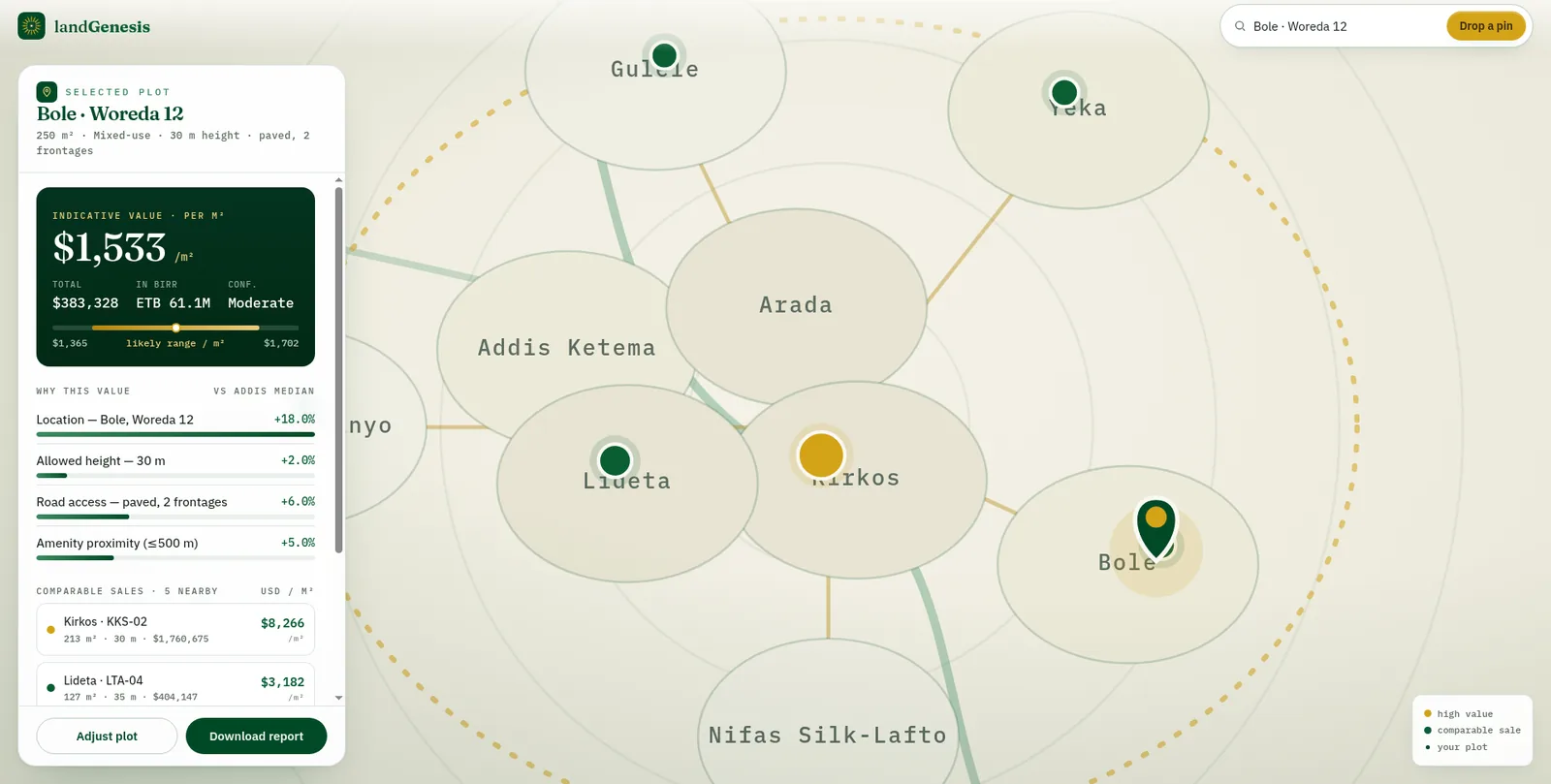
A client wanted an automated valuation tool for urban leasehold plots in Addis Ababa, for landowners and brokers. It estimates a price per square metre from government lease-auction records and the ground around each plot, and it explains every figure it gives.
On the first day I had the brief and a six-row sample of the data, and four throwaway UI prototypes were built from them: a calculator, a guided wizard, a map-first atlas and a printable report. The atlas was chosen the same day. You drop a pin on the map and the valuation and comparable sales appear around it. There were 17 logo concepts too, and the one chosen is based on the Adey Abeba, the flower Addis Ababa is named after.
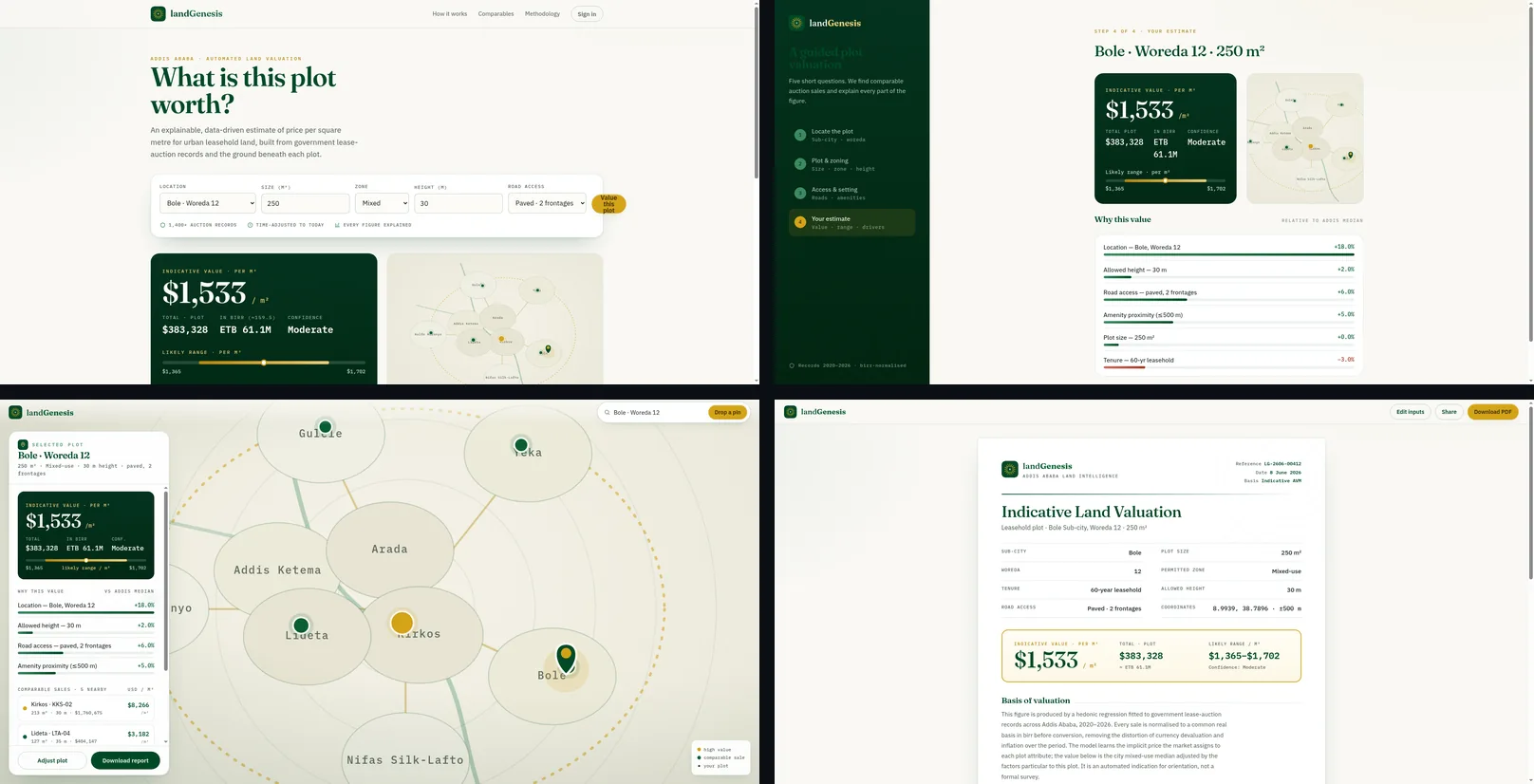 Prototype, demo data
On the second day the spec was written around the atlas, and then the build: the valuation engine, the API, the React web app with all six screens, an end-to-end walk of the deployed site, and a security pass that fixed what it found. The interface is in English, Amharic and Afaan Oromoo.
The model is ridge regression on the 2020 to 2026 auction records, with features from OpenStreetMap for the ground around each plot. No GPU, and no per-query AI bill. For a plot it gives a price per square metre, a likely range, the comparable sales it used, and how much each factor moved the figure.
A working tool in three languages, with 246 automated tests. It shows an "indicative, demo data" label, which was to stay until the full dataset and a valuer's sign-off were in place. The project has ended and the code is archived.
Now we can talk to customers through quick prototypes much more easily. People who don't code don't really understand a spec, and a working prototype lets us communicate with customers in a much more real way. Of course this means more code gets thrown away, but I think the final result will be more meaningful and closer to what the customer has in mind.
Faster iterations, more customer satisfaction and a better time to market should be the result. When we build with a good methodology and quality testing, we can be fast too. I guess it's "build fast and break fewer things" now.
If you'd like to talk about this, get in touch.
76 projects in eight months
Making software development more productive
How I build with AI agents, what it has come to since March 2026, and an app port that took about an hour from asking to running on my phone.
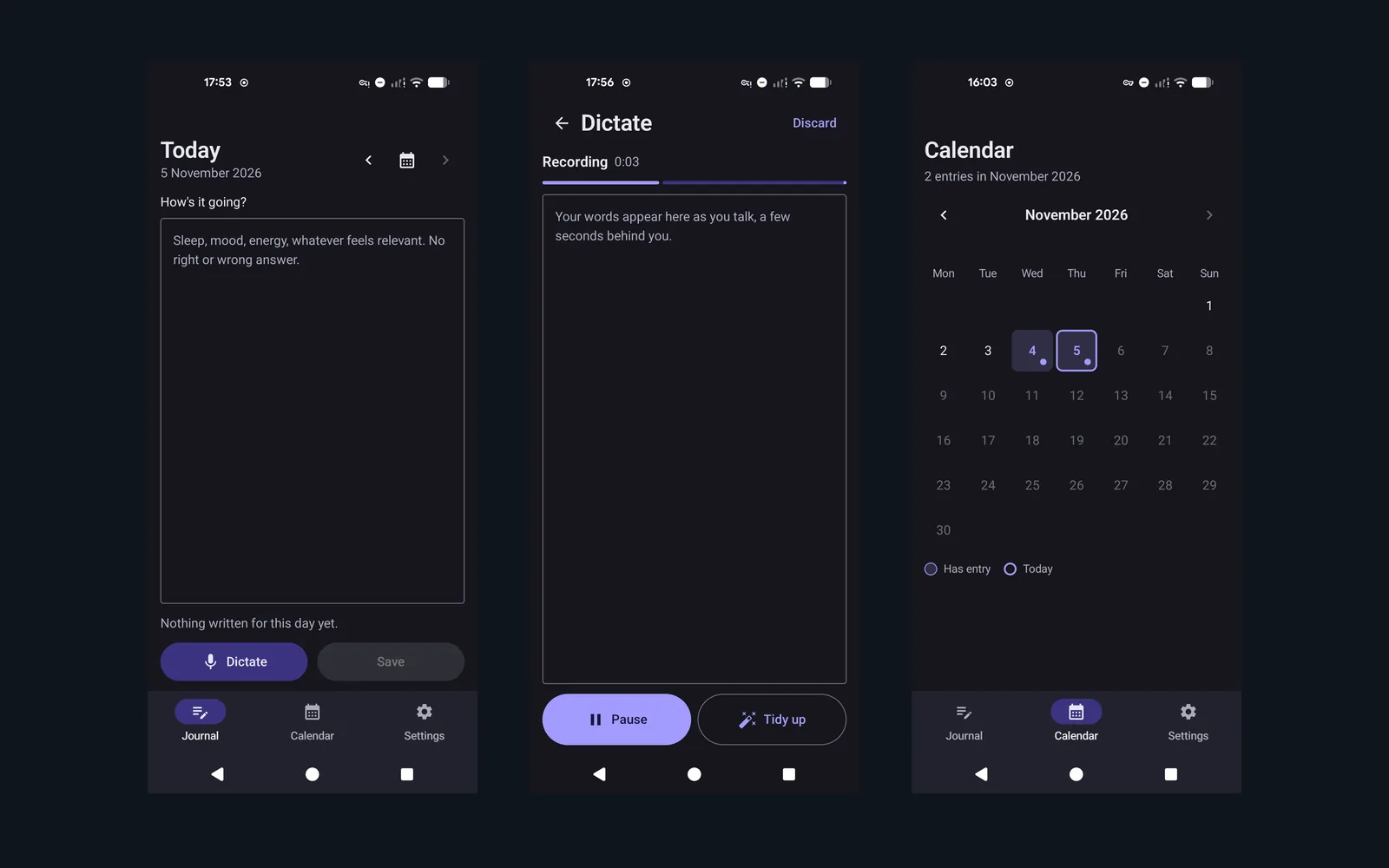
13 Android apps moved in ten days
From Flutter to Kotlin
Why I used Flutter, what I noticed when the first Kotlin apps were on my phone, and moving 13 Android apps across.
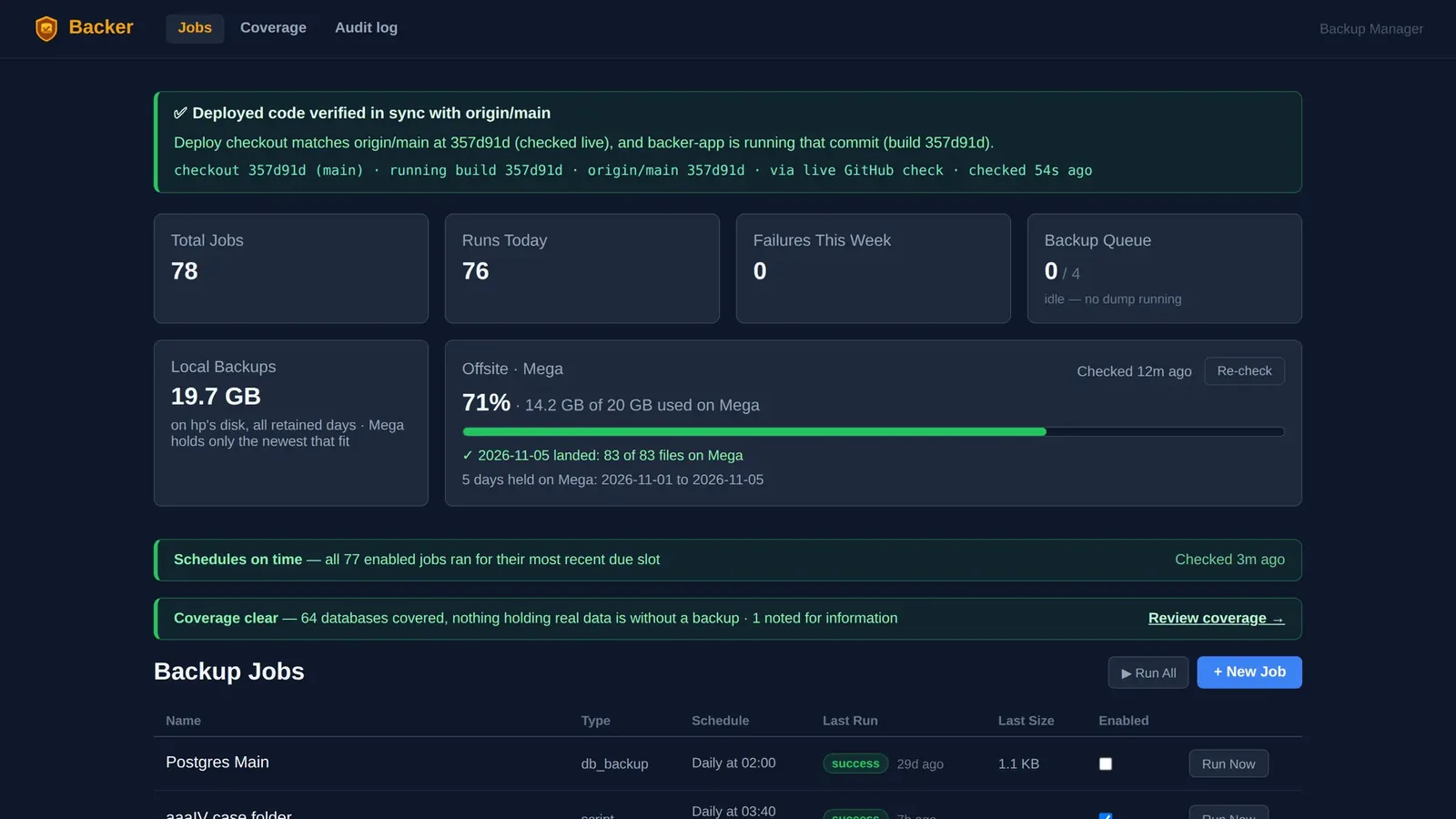
64 databases backed up
Guards that run without me
The checks that run on timers without me: scanning, patching, the test gate, backups and certificates. And what happened when a certificate authority was compromised.
6 places I look closely
When you no longer read every line
What I look at when I don't read every line: the borders of the code, its shape, and the test count.
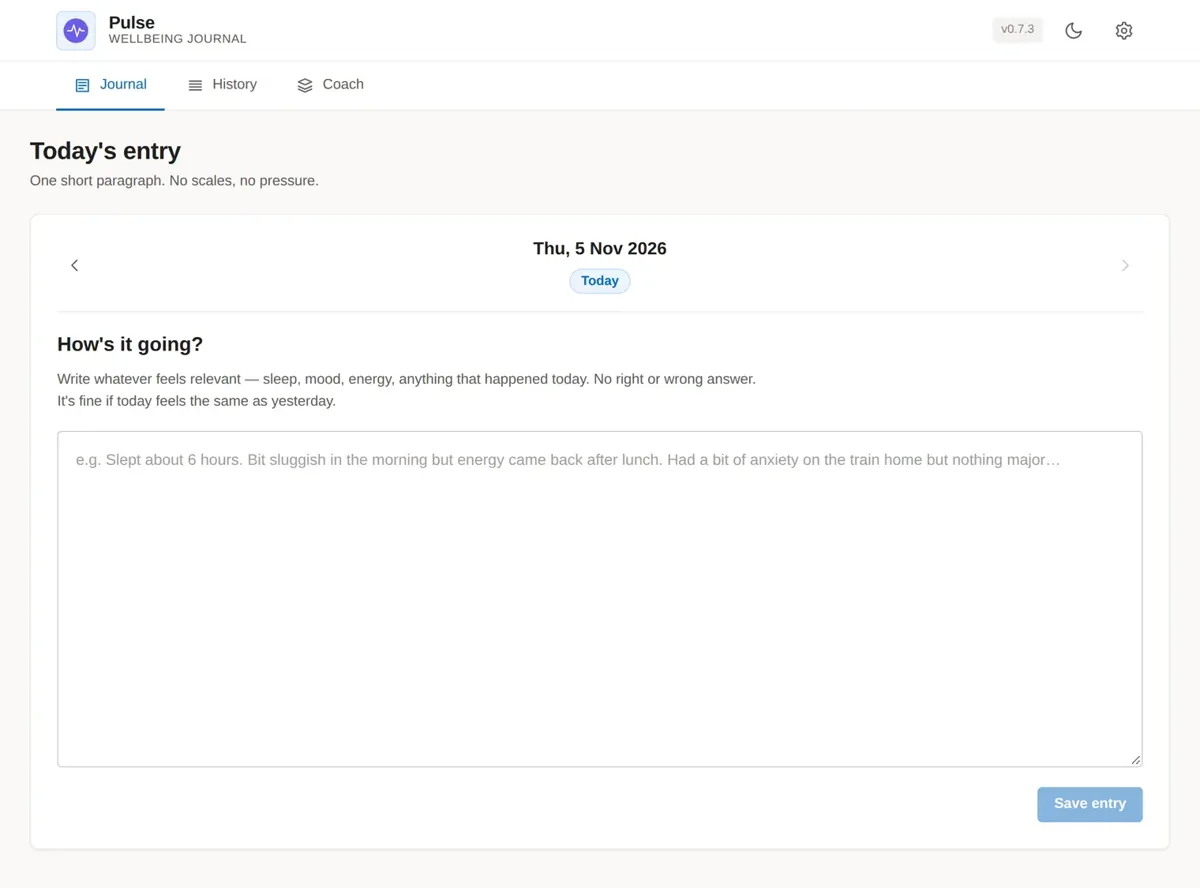
1 text box a day
A product designed for people
A demo journal for people rebuilding their working life with a coach. One text box a day, and a report that only uses what the person wrote.
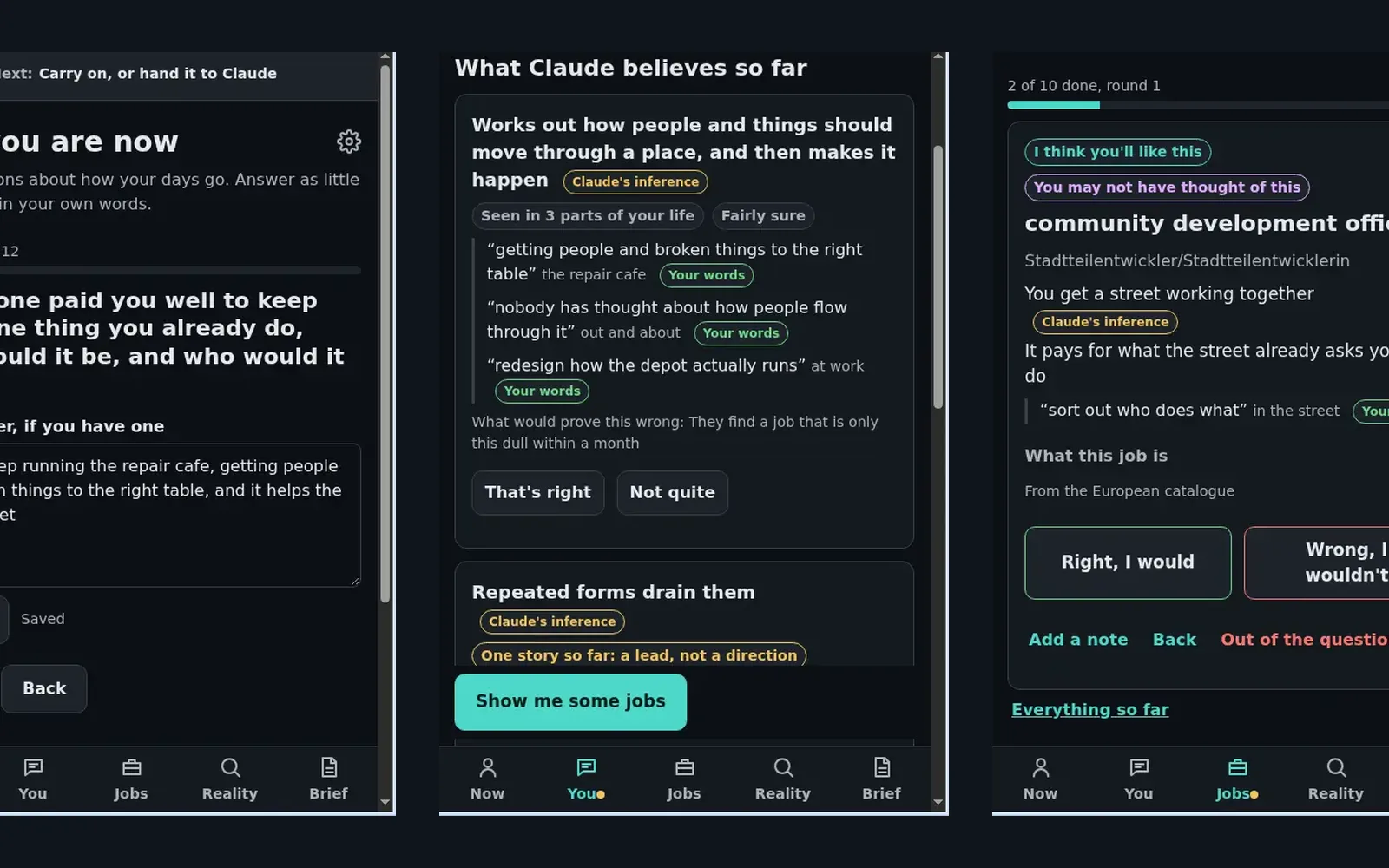
5 to 7 directions to aim for at the end
AI advice you can check
My attempt at helping people who are thinking of changing jobs or career direction, without the AI getting stuck on what they already do.